Shanghai Tongjie as a Leading Marine Watermaker Company: Intelligent Control Panels and Fault Alarms
Sep 18, 2026
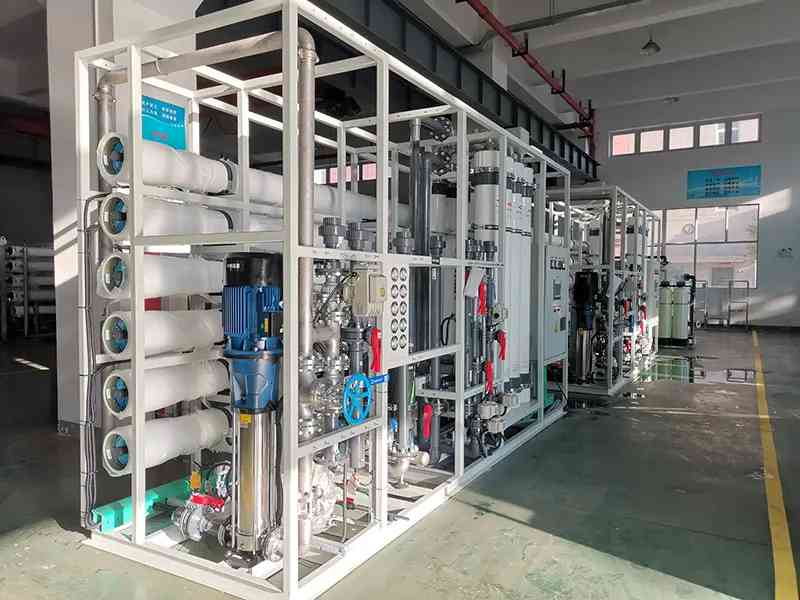
Shanghai, China Sep 18, 2026 (Issuewire.com) - Modern commercial vessels, offshore supply boats, and fishing fleets operate with streamlined crews who oversee complex propulsion and auxiliary systems daily. When investing in a marine watermaker, shipowners require intelligent automation that simplifies daily operation while protecting expensive reverse osmosis membranes from human error. As an experienced marine equipment manufacturer, Shanghai Tongjie integrates intuitive touch-screen control panels and multi-tiered fault alarms to ensure autonomous, dependable freshwater replenishment at sea.
For vessel superintendents and chief engineers, automation in marine water treatment is fundamentally about operational reliability and asset protection. Because modern commercial vessels operate with streamlined crew compliments, the freshwater generation plant must operate autonomously, diagnose abnormal hydraulic conditions instantly, and protect itself against destructive pressure spikes or contaminated intake water.
Intelligent Control Makes Marine Watermakers Easier to Operate at Crew Level
On commercial cargo ships, workboats, and offshore supply vessels, the engineering crew is tasked with overseeing main propulsion machinery, auxiliary diesel generators, electrical switchboards, and refrigeration plants. Crew members rarely possess specialized training in membrane chemistry or advanced industrial process automation.
Traditional manual watermakers require operators to perform delicate manual throttling of high-pressure needle valves, balance recovery ratios across fluctuating seawater temperatures, manually verify permeate salinity with handheld refractometers, and execute timed freshwater flushes upon stopping. If an operator opens a high-pressure bypass valve too rapidly, the resulting hydraulic pressure surge (water hammer) can permanently crack membrane fiberglass casings or rupture spiral-wound membrane leaves.
Transitioning to intelligent programmable logic controller (PLC) automation eliminates operator guesswork. Modern control architecture replaces manual needle valves with motorized pressure-regulating valves, automated feed actuators, and high-precision digital transmitters. The system automates complex thermodynamic and hydraulic sequences into standardized, repeatable operating cycles that any watchkeeping crew member can initiate with confidence.
One-Touch Start/Stop and Live TDS Create the Daily Operating View
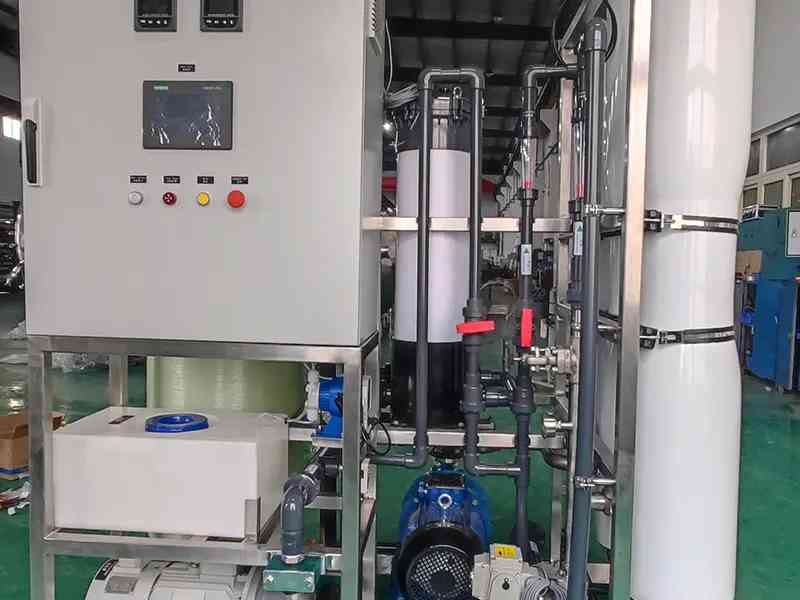
The human-machine interface (HMI) serves as the daily operating window for shipboard personnel. Industrial marine watermakers feature high-contrast, touch-screen control panels engineered for high-vibration, high-temperature marine engine rooms, complemented by physical tactile push-buttons for core start, stop, and emergency shutdown commands.
The automated one-touch startup sequence executes a disciplined hydraulic protocol:
- Low-Pressure Pre-Flushing: The low-pressure feed pump initiates flow through the pre-filtration train, expelling air pockets from filter housings and membrane vessels to eliminate hydraulic cavitation.
- Gradual High-Pressure Ramp-Up: The high-pressure pump engages via variable frequency drive or slow-acting motorized regulating valve, gently elevating system pressure to 55-65 bar over a 30 to 60-second ramp period, completely preventing mechanical water hammer.
- Automated Salinity Divert: Initial permeate generated during startup contains elevated salt levels due to static salt diffusion while the unit was idle. A high-precision inline conductivity sensor continuously measures product water total dissolved solids (TDS). An automated three-way motorized diverter valve dumps off-spec permeate overboard until water quality verifies at potable purity (TDS < 500 mg/L), at which point flow is automatically routed to the ship's potable water storage tanks.
The HMI screen consolidates real-time operating metrics into a clear visual dashboard: feed pressure, pre-filter differential pressure ("P), membrane operating pressure, product flow rate, recovery rate percentage, and live product water TDS.
Fault Alarms and Protection Logic Turn Abnormal Conditions into Action
Operating in open ocean waters or nearshore coastal traffic exposes watermakers to dynamic and hostile suction conditions. High-seas rolling can introduce air bubbles into vessel sea chests, seasonal coastal algae can instantaneously blind pre-filters, and changes in ocean salinity or temperature can cause severe hydraulic fluctuations.
An intelligent control platform incorporates tiered protective interlocks that continuously compare live sensor readings against pre-programmed safety boundaries:
- Low Feed Suction Pressure Protection: If a blocked sea strainer or aerated sea chest causes suction pressure to drop below 0.5 bar, the high-pressure pump trips within milliseconds. This critical interlock prevents the high-pressure pump from running dry, avoiding catastrophic ceramic plunger scoring or mechanical seal burnout.
- High Membrane Operating Pressure Trip: If colder seawater or elevated feed salinity drives operating pressure above 70 bar, the control system initiates an immediate pressure relief sequence to protect membrane pressure vessels and high-pressure piping weldments from structural over-pressurization.
- Filter Differential Pressure ("P) Warning: Differential pressure sensors across multi-media and 5-micron cartridge housings detect progressive fouling, alerting the crew when filter cake accumulation exceeds 1.0 to 1.5 bar so cartridge replacement can be performed before pump cavitation occurs.
- Motor Thermal and Electrical Overload: Continuous monitoring of motor winding thermistors and drive current protects pumps against phase loss, low voltage, or mechanical binding.
When an alarm triggers, the control panel displays clear, un-coded diagnostic text identifying the exact fault location alongside immediate corrective action guidance.
Automatic Flushing and Parameter Control Support Routine Membrane Care
Membrane longevity depends directly on how the system is treated when it is not operating. When an SWRO system is shut down, high-salinity seawater remains trapped inside the membrane pressure vessels. In warm engine rooms where ambient temperatures hover between 35°C and 45°C, static brine triggers rapid biological fouling, anaerobic bacterial growth, and supersaturated mineral crystallization across membrane pores.
Intelligent marine watermakers incorporate an automated freshwater flushing sequence upon every shutdown. The system draws potable water from the vessel's freshwater tanks, utilizing an auxiliary low-pressure flush pump to displace concentrated brine from all membrane vessels and high-pressure piping. Flushing continues until the discharge conductivity drops to freshwater levels, leaving the membrane elements submerged in clean, chlorinated or dechlorinated water.
For vessels docked in port or berthed during extended maintenance periods, the control system incorporates an automated interval flush timer. Every 48 to 72 hours of idle standby, the unit briefly initiates an automated freshwater rinse, preventing microbial slime growth without requiring manual intervention from maintenance personnel.
Shanghai Tongjie provides marine control panels fully integrated with marine automation standards. Systems support Modbus RTU, Profibus, or Ethernet IP communication protocols, enabling direct, reliable telemetry transmission to the vessel's centralized Engine Control Room (ECR) console or navigating bridge.
Marine Watermaker Controls and Fault-Alarms FAQ
Configuring control automation requires matching operational features to vessel manning levels and communication networks.
How Does an Automated Start Sequence Protect SWRO Membranes?
Automated startup utilizes low-pressure pre-flushing to purge entrained air and motorized valves to ramp pressure gradually, preventing destructive water hammer and membrane leaf delamination.
What Triggers an Automated Emergency Shutdown on a Marine Watermaker?
Immediate automated shutdowns are triggered by low suction pressure (preventing pump cavitation), excessive membrane pressure (> 70 bar), motor electrical overload, or manual activation of the emergency stop button.
Why Is Live TDS Monitoring Critical for Potable Water Production?
Continuous inline TDS monitoring coupled with an automated three-way diverter valve ensures that high-salinity water produced during startup or membrane breaches is dumped overboard, protecting the ship's freshwater tanks from salt contamination.
Can Control Panel Alarms Be Repeated to the Ship's Bridge or ECR?
Yes. Marine control systems provide digital alarm relays and standard Modbus/Ethernet communication ports to transmit system status, live TDS, and alarm notifications directly to the ship's Integrated Automation System (IAS) or bridge alarm panels.
How Does Automatic Freshwater Flushing Work Upon Shutdown?
Upon pressing stop, the PLC automatically activates a low-pressure flush valve to draw treated freshwater from shipboard tanks, thoroughly displacing concentrated brine from membrane pressure vessels to prevent scale formation and biofouling.
Define the Control and Monitoring Scope in the Watermaker RFQ
Specifying control requirements in the procurement phase ensures that the delivered watermaker matches the vessel's operational workflow and classification society rules. Defining automation levels, alarm repetition needs, and HMI languages avoids costly field modifications.
Submit your vessel profile, desired automation level, electrical power specifications, and remote monitoring preferences to the Shanghai Tongjie marine automation team to receive technical control schematics, HMI sample layouts, and equipment proposals.
Media Contact
Shanghai Tongjie Environmental Protection Technology Co., Ltd.
Source :Shanghai Tongjie Environmental Protection Technology Co., Ltd.
This article was originally published by IssueWire. Read the original article here.
More News








Recommended

-600x315.png)





YOUR NEWS, OUR NETWORK.
Do you have Great News you want to tell the world?
Be it updates about your business or your community, you can make sure that it’s heard by submitting your story to our network reaching hundreds of news sites across 6 verticals.